

Greetings and salutations! Or whatever they say in Shakespeare.
First of all, a big thank you to everyone who checked my last posts out, shared them and even subscribed at that early stage. The numbers aren't earth-shattering but they're a lot more than I expected. You guys genuinely made my week and I won't stop appreciating it.
To all those returning welcome back, and to everyone just now joining us karibuni. We did the introduction to Hayawani here and posted the first prologue chapter here. Hop back if you need to and then join us as we dive into Chapter 1.
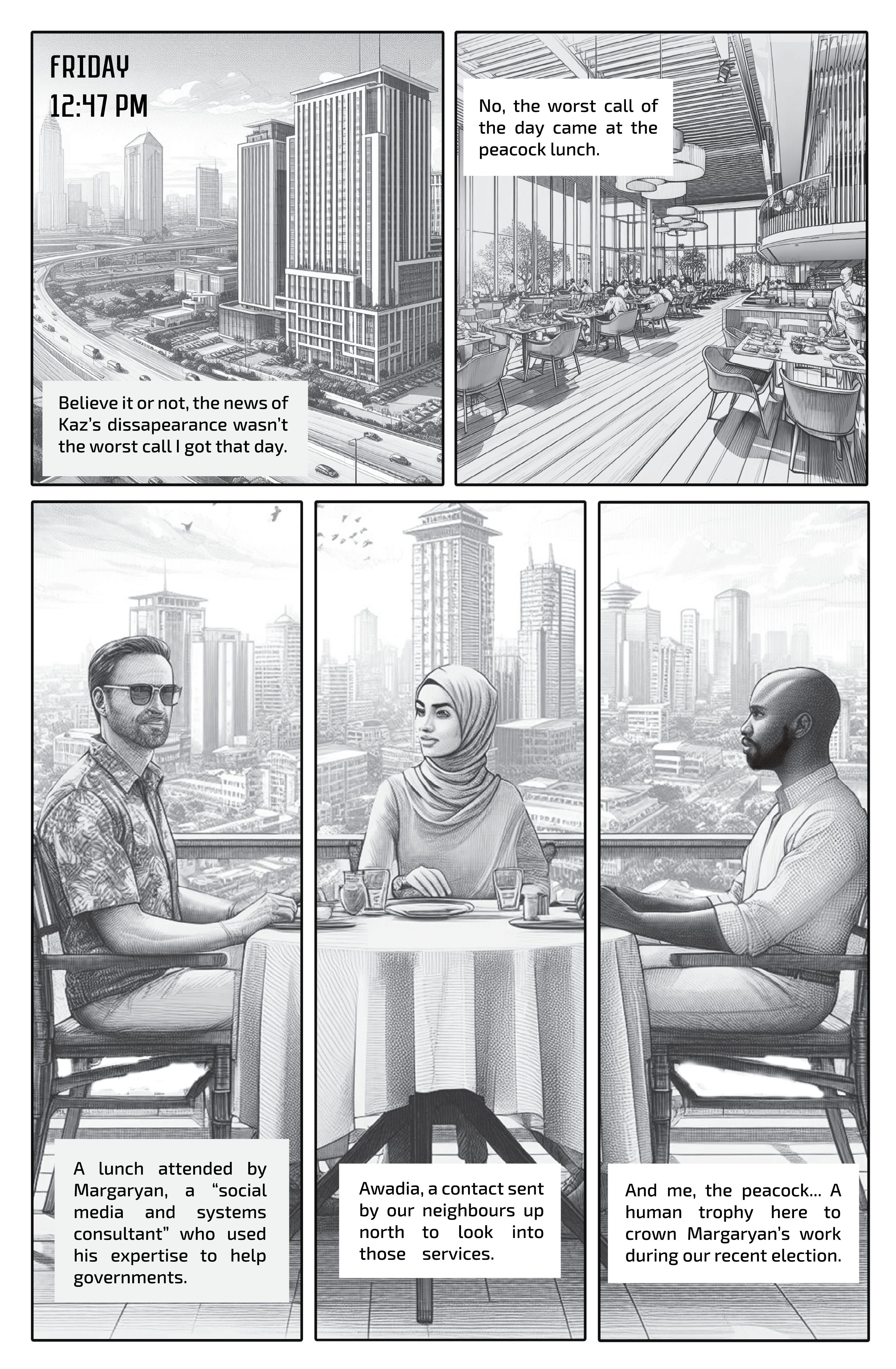
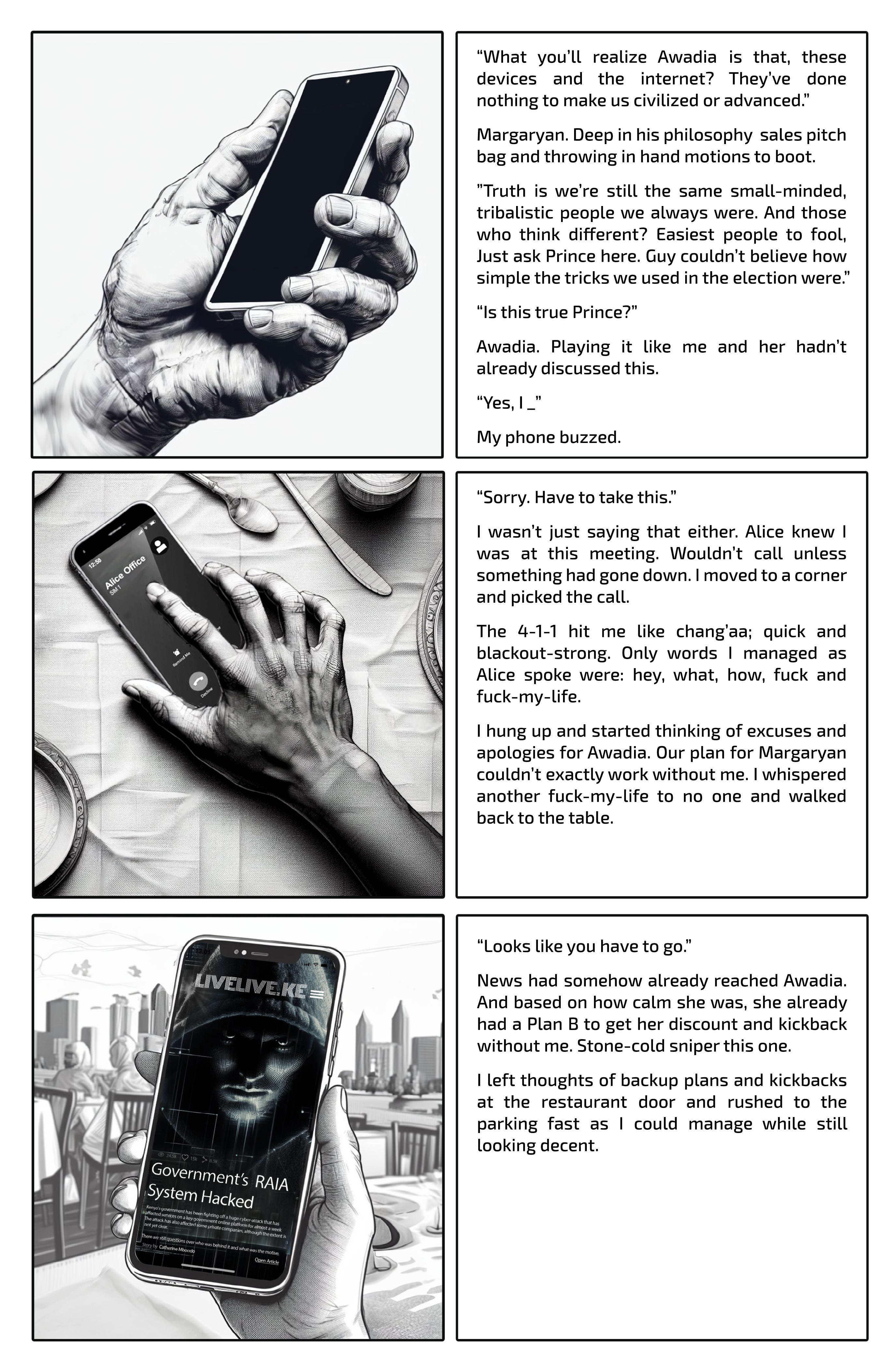
Last week we learnt that it took Prince a month to find out Kaz was missing. This week we join him on the day he finds out...
To be continued next week!
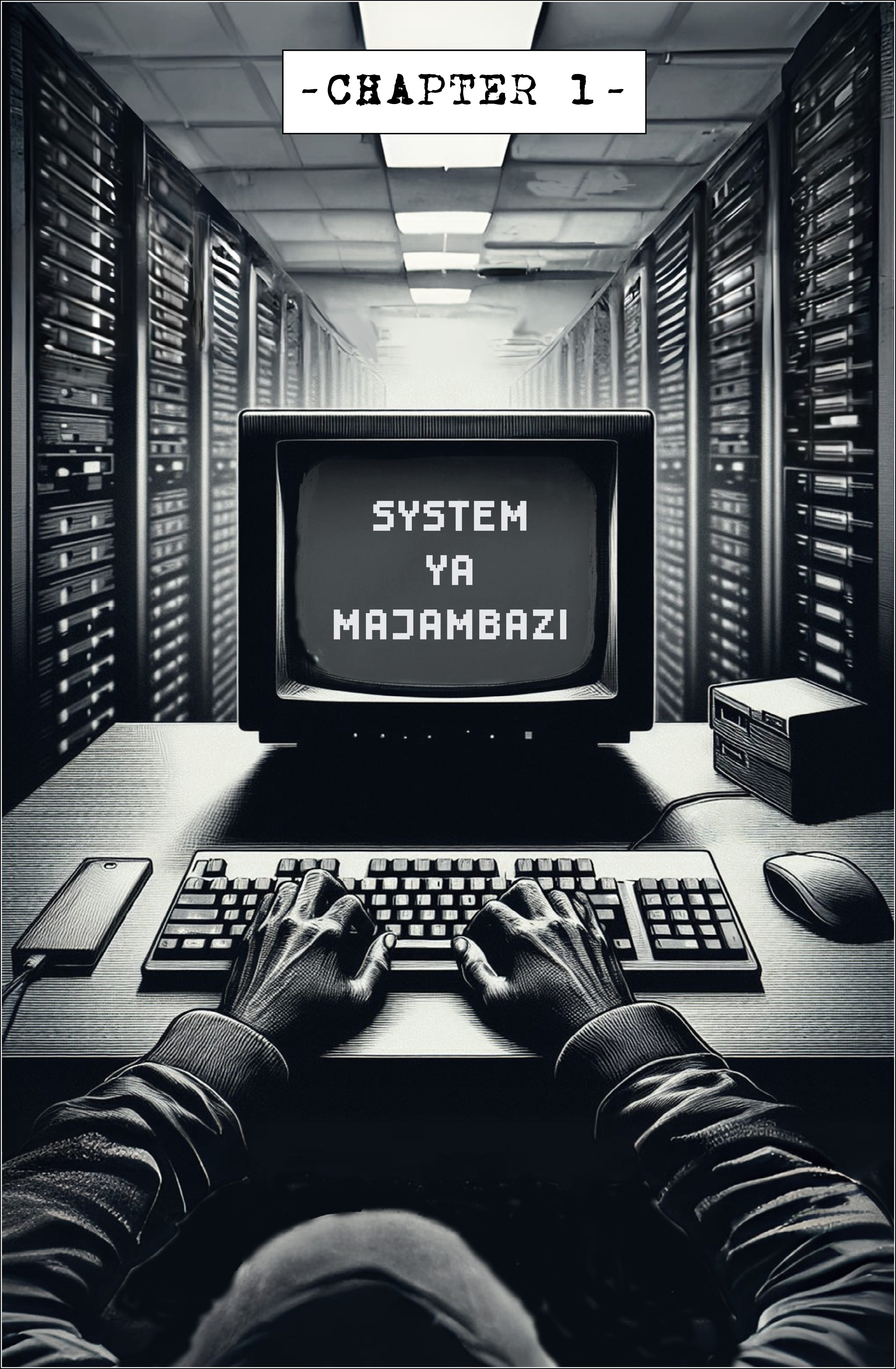
That chapter title page is still one of my favourite to come out of Hayawani though. Simply because it came together in an unplanned almost natural way. I could just as easily have used plain words and less space for it. And I could also have just called it “Chapter 1”. But I like that using an image and an evocative title allowed me to tease the ideas of the chapter. It’s basically a cover page in a project that doesn’t come out like your standard comic book issue. And you’ll be seeing more of them with each chapter since coming up with them and repurposing them for Instagram is something I genuinely enjoy. 😁
Anyway, those of you in a rush can pause here and join us next week as we dive deeper into the hacking crisis and I break down the tools and thinking I use to create images for Hayawani. If all of that sounds like exactly what the doctor ordered follow us on Instagram and hit the button below to have it delivered straight from the pan to your inbox.
For everyone else with a bit of time on their hands... Last week I promised you an inside look at the process I used to come up with chapters for Hayawani. This week I make good on that promise...
Patrick in the Comic Factory

So to start on these process posts, I thought I’d dive straight into the big stuff you’d be interested in as a process-nerd or someone considering making your own comic using AI. Capture the wider scope of the process so we can dive into details and case studies in future posts.
Kindly note that this is my individual process, honed from my years of experience as a creative and not the Gospel of Creativity™, we clear? Good. I’ll try to touch on the why of my process as I describe the how, and I urge you to pay attention to the former more than the latter. Figuring out your own whys will allow you to craft something original and decide on the parts of this post that do/don’t make sense for you.
Picking the Idea
Way back in my campus days, I got the advice that a good idea is the one that still excites you when you think about it three weeks later. There’s a sustainability truth in there and it kept me going early on, but my logic and the core behind it has evolved.
Now, the core principle is: a “good idea” isn’t just one good idea, it’s a bundle of them. Or, to paraphrase a book I recently read: you don’t need a sniper rifle, you need a machine gun.
In my experience, the creative journey has always been a crooked and twisty thing that takes much much longer than anticipated. And when you’re stuck on a page 2 years into a project you intended to write in 6 months, you need to be able to draw on fuel from something more than the great story idea.
So with Hayawani, it’s not just that I get to tell a Kenyan story that I don’t usually see in fiction, it’s that I get to learn about AI tools and audience interaction. That I get to play around in an entirely new medium that meant a lot to me growing up. And, to paraphrase Stephen King, creating just makes me a better human being, and that’s a worthwhile goal in and of itself. There are more grand reasons than these ones. There are smaller daily ones. The important thing is there are a host of whys in each project because I need different combos to keep me going till the end.
Outlining the Story
I found out pretty early on that I don’t like textbook outlining, where every single thing that will happen in the story is mapped out and the writing is just execution. Two reasons:
It’s very easy for me to get stuck in the research and planning stage and never start actually writing.
A lot of prep becomes irrelevant during execution and better ideas crop up as one writes. I find that, if I’ve spent a lot of time in prep and outlining, then I become stubborn and bitter about pivoting to a better direction.
As such, I ‘outline’ using headlight logic; named so after the principle that you can travel hundreds of miles by using headlights that only light a few metres ahead. In practice that means that I have a broad, general idea of where the story is going as well as a list of things that would be cool to do; and the details get clearer and more concrete the closer I get to specific story points.
This has been especially helpful on a story like Hayawani because it’s using AI tools that are constantly changing and I’m having to refine and adjust on the go to take advantage of that.
Now, does this method have its drawbacks? Absolutely. Will there come a time or project where I have to outline in more detail? Definitely. This is just where I am now.
For anyone interested in the details of how to structure captivating stories while working with headlight logic , I recommend Stephen King’s book “On Writing” as well as Oscar nominee Guillermo Arriaga’s BAFTA speech.
Outlining a Chapter
Before working on Hayawani, I was working on something much closer to a TV screenplay. In that format a chapter was synonymous with an episode and it needed: a problem, an attempt to solve that problem and a new problem emerging from the attempted solution. Hayawani’s chapters are structured more like novel chapters; each one captures an event/person in a specific situation and the issues that arise from that scenario lead into the next person/event/place.
As such, I go into each chapter figuring out its circumstance and then figure out how to break it down on a mostly page by page basis. Why page by page? Because my research into comics so far has led me to believe that the page is the primary SI unit in of a comic (see Neil Gaiman’s Masterclass breakdown). And, more importantly, I will be posting Hayawani a few pages at a time; so my thinking ensures I will almost always end each post on a good note no matter where I choose to end it.
So if I was doing a breakup chapter with a twist, I’d maybe break it down per page as:
Girl meets boy for coffee. There’s banter but the girl is nervous. Boy notices.
Girl finally tries to “break up nicely” with the disbelieving boy. She meanders a bit and it takes a moment but the boy finally figures it out.
Boy freaks out and starts insulting and yelling at the girl in front of everyone.
Boy sputters and chokes at the climax of his rant.
Boy collapses and passes out leaving everyone in shock.
Looking at this breakdown it should hopefully be easy to see how I can post one page at a time and have that be enough. Comic strips like Andy Capp or Flash Gordon use horizontal tiers of 2 images or more as their SI unit instead.
Outlining a Page
This is where I make a key departure from the traditional comic book method. By default I would write out the exact images that would go into each page. But, because AI doesn’t always give you the specific image you want, I don’t make that my goal. Instead I make my aim to meet the specific objective of the page while maintaining the balance of the chapter. Whether that’s by making it a comic book page, a mix of image and text or even plain text is the question. But by the end of the chapter I should feel like there’s some sort of balance and logic happening across it.
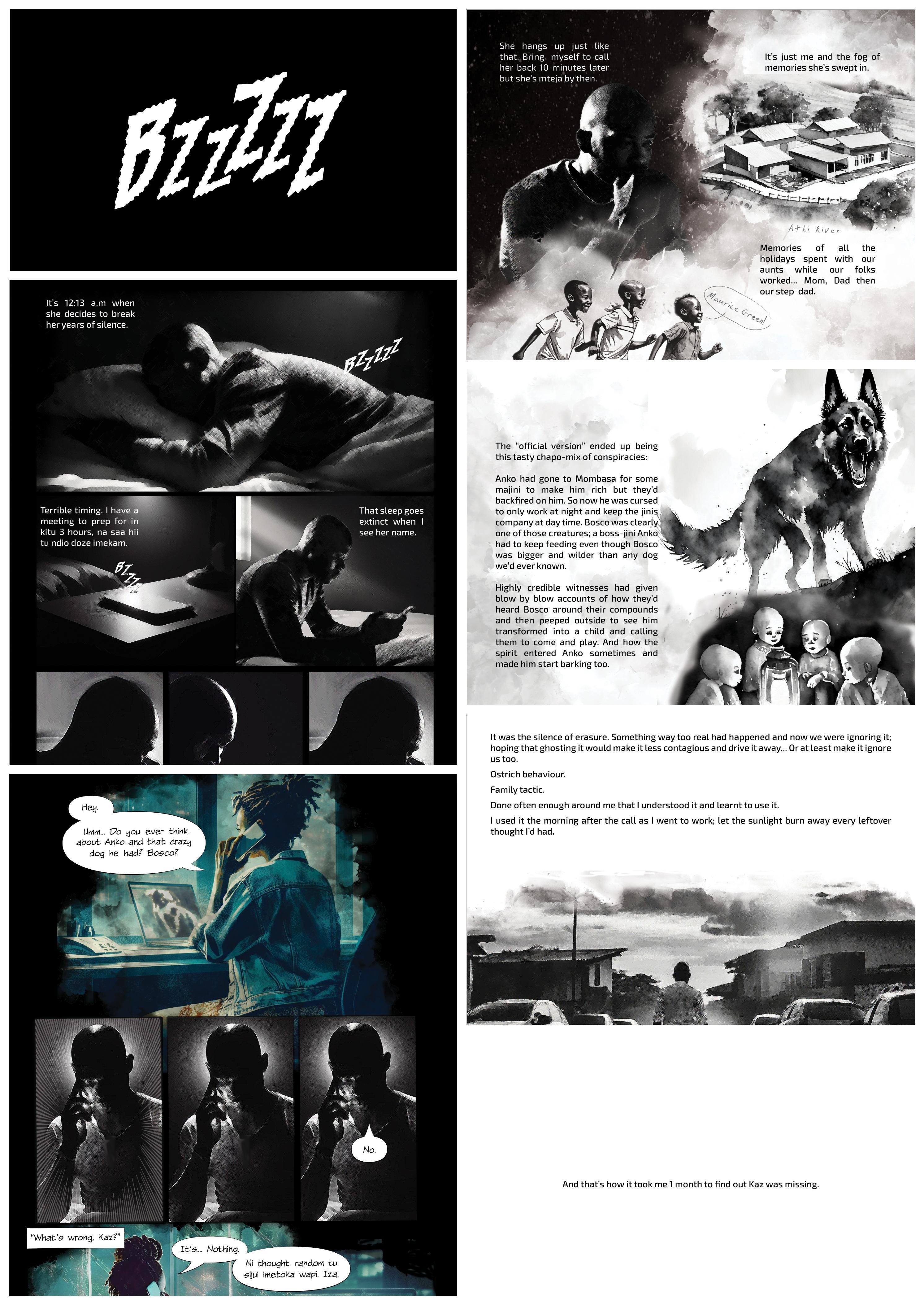
For instance with Hayawani’s prologue chapter, the logic driving it was me wanting it to move from a comic book feel to a text one while also moving from darkness to light. How did I arrive at that logic? By leaning on my instincts, my experience and the story itself. I unfortunately can’t teach most of that, but that also means that I can’t copy your instincts and tastes and experience. So I look forward to seeing you creating entirely different and exciting stories that are your own by giving this process your own personal spin.
Okay, I think I’ll stop there for today. Next time we cover my AI image creation process for Hayawani and the skills and tools tied to that. Feel free to let me know what resonated or didn’t from this post as well as what you’d like to see in future process posts by responding either here or on my Instagram.
Godspeed.